
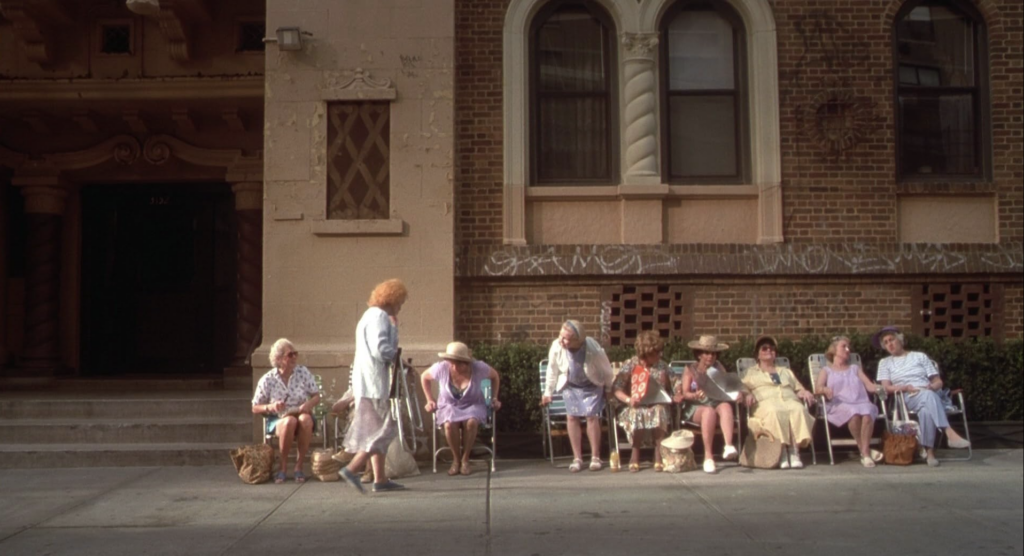
I’ve been reminding myself of what Jane Jacobs wrote:
“[…] there must be eyes upon the street, eyes belonging to those we might call the natural proprietors of the street. The buildings on a street equipped to handle strangers and to insure the safety of both residents and strangers, must be oriented to the street. They cannot turn their backs or blank sides on it and leave it blind.”
Everything we do in design is with others, otherwise we would run the risk of calling ourselves artists. The difference between work I’ve done elsewhere and in the team I’m now in (Digital Screening) is that we’re doing this in service of people running live services (Screening). Our missions are intricately linked.
I tried to illustrate the environment teams work in below. A digital designer will be in a UCD team working with colleagues in product, tech and delivery on a project. That project is probably part of a programme managed by a programme manager (they’re called Pathway Leads) that work closely with SLT. Deputy Directors sponsor a number of programmes but Heads of (that’s me and my colleagues) help all the projects across all programmes. Sometimes the projects are small, sometimes they’re very tech focused and there is little UCD, sometimes they’re brand new and it’s all user research.
Programmes interact with national screening programmes as we’re probably trying to modernise some of the digital services that are already in place.
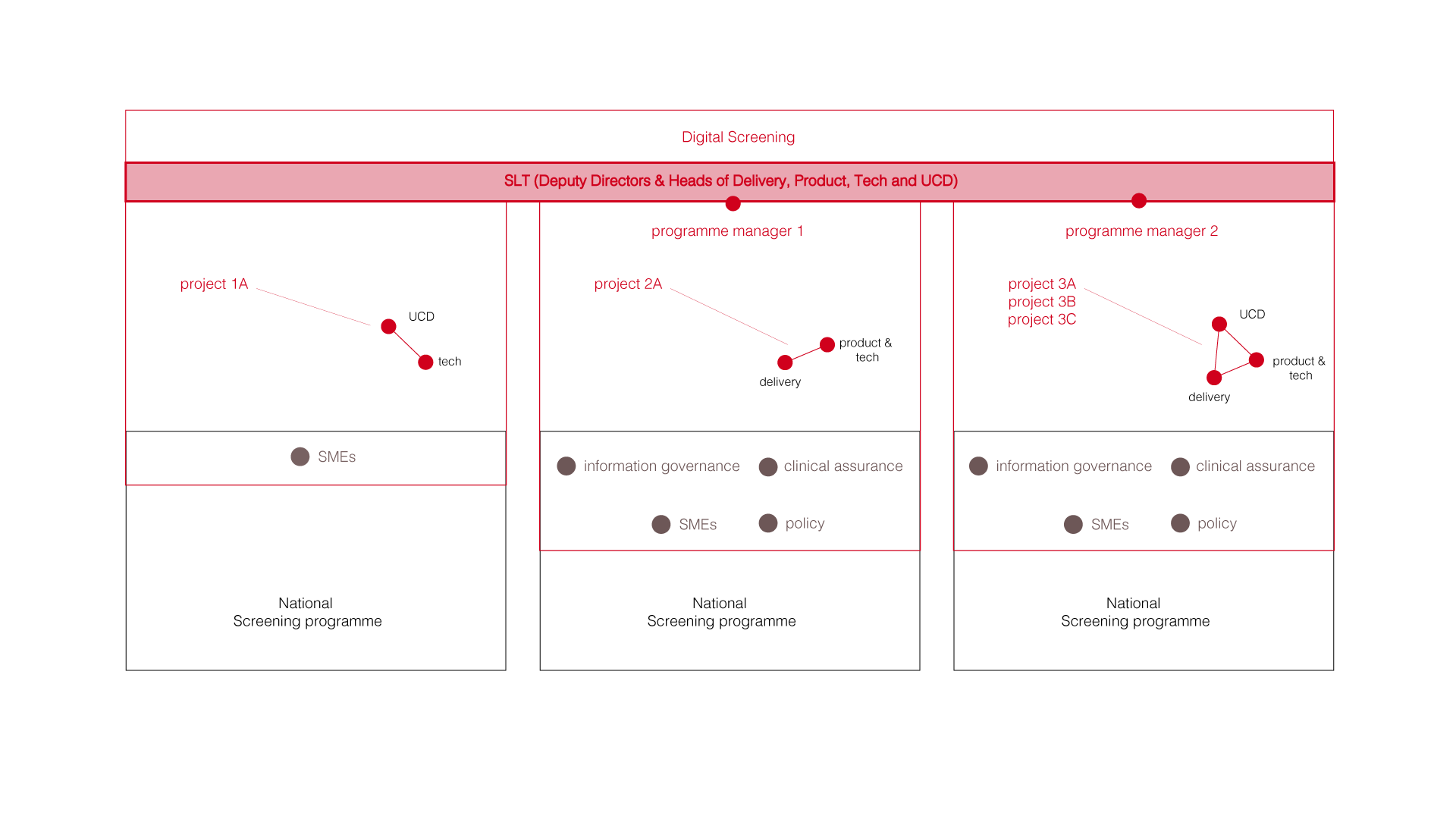
SLT might give feedback, helping reframe something, place the right people in work at the right time, manage any problems that arise. It’s a team sport. I can’t win on my own. I need my bosses to have visibility of what I’m thinking about, I need other Heads of to give me feedback or support me, and I need individuals in my practice to know what’s going on.
Equally, design work that is done in the dark doesn’t last. It needs the rough and tumble of other people’s opinions to earn its polish. Designers get feedback from subject matter experts, clinical assurance folks, policy teams and more. There is no space to work in isolation, there is just compromise. This can be heartbreaking for designers just wanting to ‘make things on the internet’ but in a space where AI is now telling people lies about their health, we need as many eyes as we can to develop the solutions that will get people to trust the information they receive, book an appointment and get tested. If you want to go further go together right? Here, more than most places I’ve worked in, design is the expression of that togetherness.
Discover more from designswarm {thoughts}
Subscribe to get the latest posts sent to your email.